
5 Herbal Teas Worth Keeping in Your Kitchen (and What the Evidence Actually Says)
FOODEDITOR'S PICKS
Majed Almajed
6/20/20265 min read
Majed is the founder of GrowForageHeal, where he writes practical, well-sourced guides on herbal teas, foraging, and natural remedies — with a focus on honest, balanced information rather than hype.
My grandmother kept a battered tin of dried chamomile on the shelf above the kettle, and reached for it the way other people reach for aspirin. Headache, bad day, a child who wouldn't settle — out came the tin. I used to think it was just habit. Years of growing and reading about herbs later, I've landed somewhere more interesting: she was partly right, partly romantic, and the gap between those two things is exactly where most tea advice falls apart.
Herbal tea isn't medicine, and anyone who tells you a mug of it will fix your thyroid is selling something. But several of these plants have real, measurable effects that researchers have actually bothered to study. Here are five worth a permanent spot in your kitchen, what tradition claims, what the science genuinely supports, and how to brew each one so it tastes like more than warm lawn clippings.
1. Chamomile — The bedtime classic
Chamomile is the one almost everyone reaches for, and the tradition runs deep — it was a valued medicinal herb in ancient Egypt, Greece, and Rome. It's used to wind down and ease into sleep, and some early studies on mild anxiety and sleep quality show gentle, encouraging signals. I'll be straight with you, though: the U.S. National Center for Complementary and Integrative Health rates the overall evidence as still limited. So enjoy it as a calming ritual that may help you unwind, not as a guaranteed sleeping pill.
The brewing mistake people make is steeping it for ninety seconds like a black tea. Herbal flowers need time. Cover the cup and steep for a full ten minutes so the volatile oils actually make it into the water. One caution worth knowing: chamomile is in the ragweed family, so if you have a serious ragweed allergy, treat your first cup with respect.
2. Peppermint — After dinner, every time
If chamomile owns bedtime, peppermint owns the hour after a heavy meal. Its long traditional use is for digestion — bloating, that overfull feeling, a restless stomach. The interesting part is where the evidence is strongest: enteric-coated peppermint oil capsules have decent research support for irritable bowel syndrome symptoms, according to the NCCIH. A cup of peppermint tea is gentler than a capsule, but the same soothing compounds are along for the ride.
Brew it hot and covered for five to seven minutes. One honest caveat: if you're prone to acid reflux, peppermint can relax the valve at the top of the stomach and make heartburn worse, so it's not the after-dinner hero for everyone.
3. Ginger — The one for queasy mornings
Ginger earns its kitchen shelf on the strength of nausea relief. This is one of the better-supported herbal effects out there: ginger has been studied repeatedly for nausea, including the morning sickness of pregnancy and post-operative queasiness, and the NCCIH reflects that body of research. It won't cure motion sickness, but a strong cup before a bumpy car ride is a genuinely reasonable thing to try.
Fresh is best here. Slice a thumb of ginger root, simmer it in water for ten minutes rather than just steeping, and add a squeeze of lemon and honey. If you're pregnant or on blood thinners, keep your intake to ordinary culinary amounts and check with your provider before going heavy on it.
4. Lemon balm — The underrated calmer
Lemon balm is the one most people walk past, which is a shame. A bright, lemony member of the mint family, it has a long tradition as a gentle mood-lifter and stress-softener, and small studies have looked at it for calmness and mild anxiety with encouraging early results. The research is younger and thinner than chamomile's, so I'd file it under "promising and pleasant" rather than "proven," and that honesty matters.
It also happens to be one of the easiest herbs to grow — it borders on a weed in a good way — so a single plant on a windowsill keeps you in fresh leaves all summer. Steep a generous handful of fresh leaves, or a heaped teaspoon dried, covered, for around ten minutes.
5. Nettle — The spring tonic with actual nutrients
Nettle is my seasonal favorite, and the most genuinely nourishing of the five. Stinging nettle has been eaten and brewed for centuries as a "spring tonic," and unlike vaguer wellness claims, this one has substance: the leaves are legitimately rich in vitamins and minerals like iron and calcium. It tastes green and earthy, somewhere between spinach and black tea.
A real safety note, because nettle is the one plant here you might forage: only harvest nettle you can identify with complete confidence, and never eat a wild plant based on a single source. Cross-check with a reliable field guide or a knowledgeable local before you pick anything. Once dried or cooked, the sting disappears entirely. Steep dried nettle, covered, for ten minutes for a deep green cup.
How to brew herbal tea so it's actually worth drinking
Most disappointing herbal tea comes down to two fixable errors: not enough plant, and not enough time. A few rules that fix almost everything:
- Amount: 1 heaped tsp dried (or a small handful fresh) per cup. Herbal leaves and flowers are bulky and mild; skimping gives you flavored water.
- Water: just off the boil. Hot enough to extract, not so violent it scorches delicate flowers.
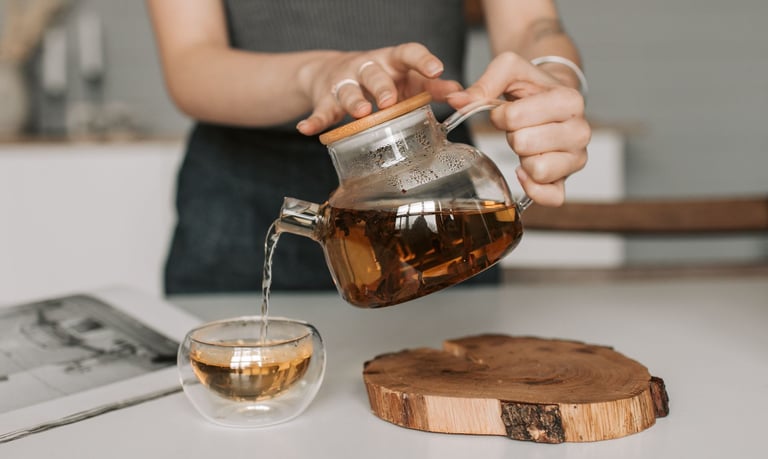
- Cover it: put a saucer over the cup while it steeps. This traps the volatile oils that would otherwise float away as steam — the single biggest upgrade.
- Time: 5–10 minutes, longer than you think. Herbal infusions need far more time than black or green tea.
- Roots: simmer, don't steep (ginger, dried roots). Tough material needs active heat to give up its compounds.
A few honest words on safety
Herbal teas are food, and for most healthy adults an everyday cup is a low-risk pleasure. Still, "natural" doesn't mean "harmless for everyone." A handful of sensible guardrails:
- Pregnancy and breastfeeding: some herbs are fine in food amounts and questionable in stronger doses. When in doubt, ask your provider rather than the internet.
- Medications: herbs can interact with prescriptions — blood thinners and ginger, for instance. If you take regular medication, run new herbal habits past a pharmacist.
- Allergies: the plant families matter (chamomile and ragweed share one). Start small with anything new.
- Claims: a tea may help you relax, settle a stomach, or sleep a little easier. It will not cure a disease, and any source promising that is one to close.
None of this is medical advice, it's a gardener's and tea-drinker's perspective, grounded in what the research currently shows. Treat these five as small, pleasant tools rather than cures, and they'll quietly earn their place on your shelf the way that battered tin earned its place on my grandmother's.